
EARTHQUAKE LIFTS SARANGANI COAST BY 2 METERS, LEAVING CORAL REEFS EXPOSED AND DYING
- Raymond Sakiwat

- 5 days ago
- 2 min read
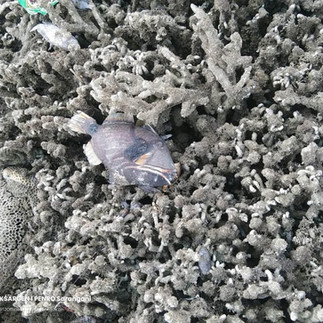
GLAN, Sarangani — A powerful geological shift triggered by the recent magnitude 7.8 earthquake has dramatically altered portions of Sarangani’s coastline, raising the seabed by about two meters and exposing once-submerged coral reefs and seagrass beds that are now showing signs of widespread die-off.
The Department of Environment and Natural Resources (DENR) Soccsksargen said a scientific assessment will be conducted on June 16 in Barangay Pangyan, Glan, following the confirmed coastal uplift that extended parts of the shoreline by approximately 200 meters.



Photos by DENR SOCCKSARGEN
The phenomenon was first reported by residents on June 10 after they noticed unusually low sea levels in the area. Subsequent field surveys by the Sarangani Bay Protected Seascape Protected Area Management Office (SBPS-PAMO) revealed extensive stretches of exposed coral reefs, seagrass beds, and marine organisms that had previously remained underwater.
According to the DENR, many of the exposed marine species have already begun to die due to prolonged exposure to air and sunlight.
The agency, together with the Mines and Geosciences Bureau Region XII and local government units, will conduct further scientific studies to assess the full environmental impact of the uplift and determine possible mitigation measures.
The Philippine Institute of Volcanology and Seismology (Phivolcs) explained that the coastal uplift was caused by movements along the Cotabato Trench during the magnitude 7.8 earthquake. The tectonic activity raised sections of the coastlines of Sarangani and neighboring Davao Occidental, permanently exposing areas that were previously beneath the sea.
Environmental authorities are now monitoring the affected coastal ecosystem amid concerns that the sudden change could have long-term consequences on marine biodiversity and the livelihoods of coastal communities that depend on the area’s fisheries and marine resources.


Comments