


SAN JUAN RIVER OVERFLOWS, MAJOR QC INTERSECTION SUBMERGED

Heavy rains on Monday, August 17, 2026, caused the San Juan River to overflow, flooding the intersection of E. Rodriguez Sr. Avenue and G. Araneta Avenue in Quezon City.
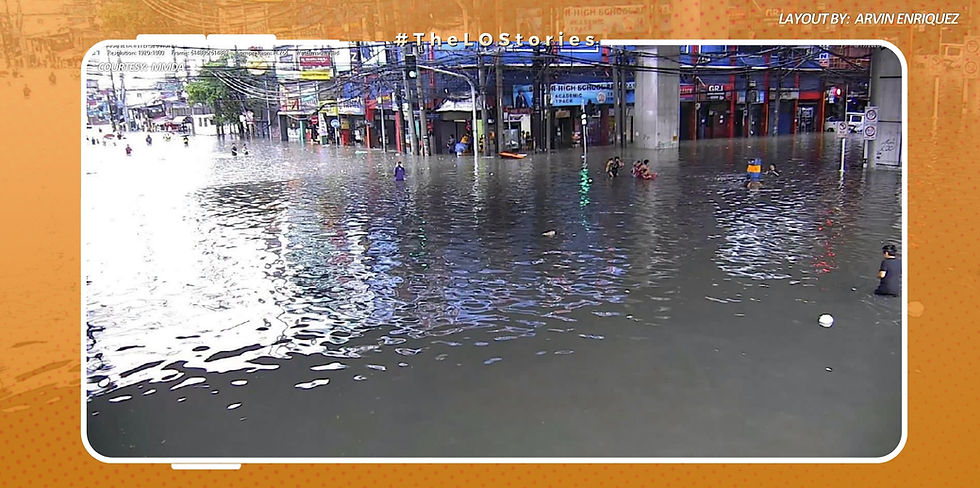
The incident once again highlighted the flooding vulnerability of one of the city’s major thoroughfares. The MMDA advised motorists to avoid the area after floodwaters made portions of the road impassable, warning drivers not to risk crossing deep water.
The flooding is particularly significant because the E. Rodriguez–G. Araneta area has long been identified as prone to flooding. In May, President Ferdinand Marcos Jr. inspected the ongoing G. Araneta Drainage Improvement Project, which includes the installation of two 1.5-meter-diameter drainage pipes designed to increase the area’s drainage capacity and channel rainwater toward the San Juan River. The nearly ₱500-million project was reported to be 96.75% complete at the time of the inspection.
Marcos also said a pumping station was being considered to further address flooding in the area, noting that the location has historically flooded even during heavy rainfall. A permanent pumping station closer to the San Juan River is also being planned.
The latest flooding raises an important question about flood-control infrastructure: Can drainage improvements keep pace with the volume of water generated by increasingly intense rainfall and rising river levels?
Past flooding incidents have also affected the same corridor. In September 2025, E. Rodriguez Avenue experienced severe flooding, while G. Araneta Avenue and nearby roads became impassable in several areas.
Flood management in Metro Manila is not dependent on a single project. Drainage improvements, pumping stations, river management, regular clearing of waterways, solid-waste management and proper urban planning all need to work together.
The San Juan River itself is part of a larger interconnected water system that ultimately connects to the Pasig River. Managing flooding therefore requires coordination beyond a single intersection or city.
For motorists and commuters, however, the immediate priority remains safety. When floodwaters become deep or roads are declared impassable, authorities continue to urge the public to avoid crossing rather than risk lives and vehicles.
As rains continue, the flooding at E. Rodriguez and G. Araneta serves as another real-world test of Metro Manila’s flood-control system—and a reminder that infrastructure must not only be built, but must work when communities need it most.


Comments